


KEYTAKEAWAYS
- CZ’s renewed visibility strengthens Binance’s narrative power but deepens regulatory skepticism in the U.S.
- Binance’s ownership structure, not operations alone, is emerging as a core obstacle to state-level licensing.
- Even with political tailwinds, fragmented state regulation makes Binance’s U.S. return a long and uncertain process.

CONTENT
As CZ regains influence after a Trump pardon, Binance faces mounting U.S. hurdles—from ownership concerns to state-level licensing—raising doubts over whether a comeback is possible without structural change.
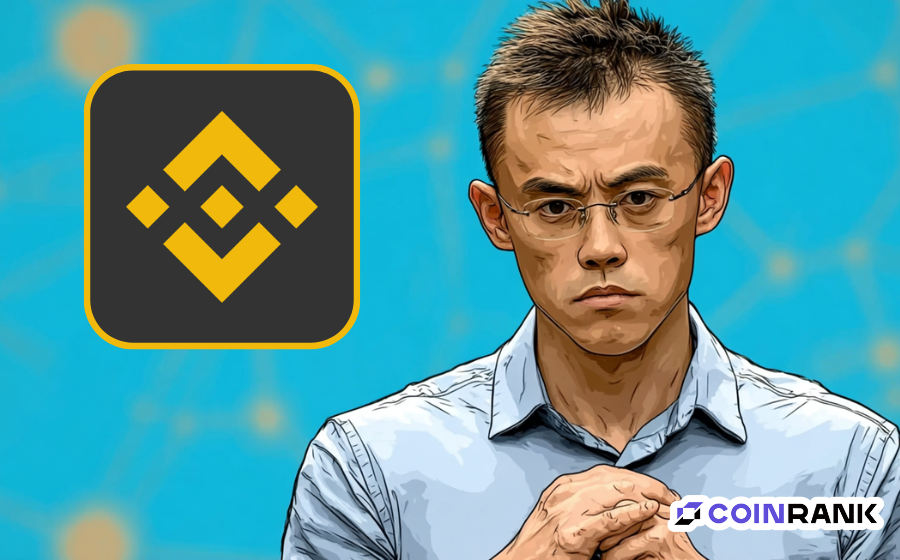
After receiving a pardon from U.S. President Donald Trump, Binance founder CZ has re-emerged at the center of the crypto stage. Although CZ is legally prohibited from participating in Binance’s day-to-day operations, his influence and political capital have returned swiftly. Alongside the elevation of He Yi to co-CEO and Binance’s increasingly proactive outreach to U.S. financial and political circles, speculation about the exchange’s potential return to the U.S. market has once again gained momentum.
CZ’S RETURN, BINANCE’S DILEMMA?
After admitting to anti–money laundering violations in 2023, Changpeng Zhao (CZ) stepped down as CEO of Binance. Following a pardon from Donald Trump in October, CZ has quickly regained high visibility across the crypto industry. He has repeatedly praised Trump’s pro-crypto stance and stated his ambition to “make the United States the crypto capital of the world.”
Although CZ is legally barred from any formal or informal involvement in Binance’s operations, his public presence and influence continue to shape market sentiment—and remain a central factor in evaluating Binance’s potential return to the U.S.
According to Bloomberg, citing multiple people familiar with the matter, Binance is evaluating concrete plans to revive its U.S. subsidiary, Binance.US, including a potential capital restructuring that could reduce CZ’s ownership stake.
Sources said CZ’s equity position has become a key obstacle to securing licenses in multiple U.S. states, making it one of the main barriers to business expansion. In response, Binance pushed back on the report, stressing that Binance.US is legally independent and denying claims that the parent company is directing a restart of its U.S. operations.
YI HE AS CO-CEO: STABILITY OR AN EXTENSION OF CZ’S INFLUENCE?
A few weeks ago, Binance appointed co-founder Yi He—long regarded as a close ally of CZ—as co-CEO, a move widely interpreted as signaling stability and transformation. However, her close relationship with CZ has also made it harder to clearly separate CZ from Binance in the eyes of regulators and the market.
Following CZ’s incarceration, Yi He became the company’s most visible public face, shaping strategic direction and reframing Binance’s growth narrative. At the same time, questions have emerged around the internal balance of power between Yi He and fellow co-CEO Richard Teng, whose regulatory background rose to prominence after the enforcement crisis subsided.
FROM WALL STREET TO POLITICAL ALLIES: IS BINANCE REBUILDING ITS U.S. NETWORK?
Binance.US once commanded roughly 35% market share, but following U.S. enforcement actions 2 years ago, multiple states revoked its licenses, driving its presence in the market to near zero.
More recently, Binance appears to be actively strengthening ties with U.S. financial and political forces. This includes deepening product collaboration with BlackRock in the tokenization space, as well as building links with the Trump family–backed World Liberty Financial.
These moves are widely seen as part of Binance’s effort to pave the way for a return to the U.S., rebuilding a network of allies across both financial and political spheres.
A LONG ROAD BACK: STATE-LEVEL REGULATION REMAINS THE BIGGEST BARRIER
At present, Binance.US is still unable to operate in more than a dozen U.S. states—a situation that increasingly intersects with political dynamics. Lee Reiners, a financial law scholar at Duke University, noted that obtaining money transmitter licenses will be a major challenge, particularly in states governed by Democrats, citing past compliance violations and ongoing regulatory concerns.
Even as the broader political climate appears to be turning more crypto-friendly, state-level regulatory hurdles continue to pose a formidable obstacle for Binance, making any return to the U.S. a long and difficult process.