


KEYTAKEAWAYS
- NYSE’s tokenized securities focus on legal ownership, institutional liquidity, and regulatory compliance, addressing limits that crypto-native on-chain stock tokenization intentionally avoids.
- Ondo’s tokenized stocks prioritize accessibility, programmability, and DeFi integration, offering market exposure rather than shareholder rights or traditional exchange-level liquidity.
- As tokenized securities mature, Ondo is more likely to become an interface layer than be replaced, bridging regulated assets with crypto-native capital markets.

- KEY TAKEAWAYS
- INTRODUCTION: NYSE’S RWA MOVE SIGNALS A STRUCTURAL SHIFT IN TOKENIZED SECURITIES
- ONDO AND SOLANA: ON-CHAIN RWA EXPANSION BEFORE NYSE TOKENIZED SECURITIES
- THE TWO CORE PROBLEMS OF ON-CHAIN STOCK TOKENIZATION TODAY
- WHY TOKENIZED STOCKS ARE NOT ABOUT DIVIDENDS OR TRADITIONAL LIQUIDITY
- NYSE TOKENIZED SECURITIES VS ONDO RWA: FUNDAMENTALLY DIFFERENT GOALS
- WHAT NYSE’S RWA STRATEGY CAN ACTUALLY SOLVE
- WILL ONDO AND WEB3 RWA PROJECTS BE REPLACED OR ABSORBED?
- THE LONG-TERM STRUCTURE OF TOKENIZED RWA MARKETS
- CONCLUSION: TWO PARALLEL PATHS FOR RWA TOKENIZATION
- DISCLAIMER
- WRITER’S INTRO
CONTENT
NYSE’s move into RWA tokenization reshapes markets. This article explores how tokenized securities differ from Ondo’s on-chain stocks and what the future holds.
INTRODUCTION: NYSE’S RWA MOVE SIGNALS A STRUCTURAL SHIFT IN TOKENIZED SECURITIES
When the New York Stock Exchange disclosed that it is exploring a blockchain-based platform for tokenized securities and extended trading hours, the signal was unmistakable. This was not a pilot from a crypto startup or a marginal experiment at the edge of finance. Instead, it marked a moment when core U.S. market infrastructure began to treat real-world asset tokenization as a long-term structural evolution rather than a speculative trend.
The importance of the move lies less in immediate implementation details and more in what it represents. Tokenization is no longer framed solely as a DeFi innovation. It is increasingly viewed by traditional finance as a tool to modernize settlement, improve capital efficiency, and extend market accessibility, all while preserving regulatory control.
ONDO AND SOLANA: ON-CHAIN RWA EXPANSION BEFORE NYSE TOKENIZED SECURITIES
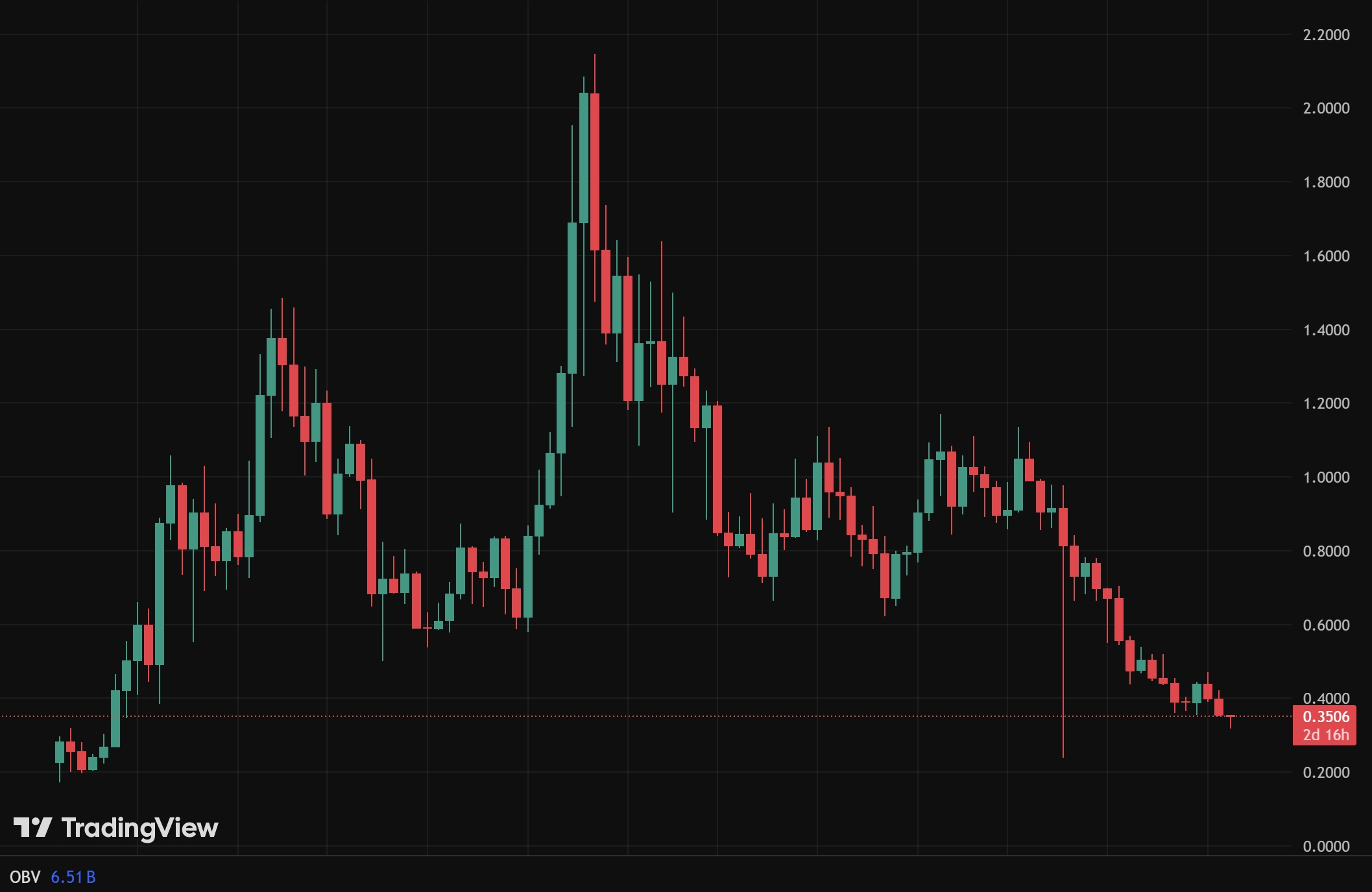
Only days before the NYSE-related news, Ondo Finance announced that hundreds of tokenized stocks and ETFs had gone live on the Solana mainnet via Ondo Global Markets. The product set spans equities across industries, broad and thematic ETFs, market indices, commodities such as gold and oil, as well as government and corporate bonds, including leveraged and inverse ETF exposure.
At first glance, these developments appear to point toward the same destination. However, a closer look reveals that they represent two distinct paths toward tokenization. Rather than competing directly, they highlight fundamentally different assumptions about who tokenized assets are for and how they are meant to be used.
THE TWO CORE PROBLEMS OF ON-CHAIN STOCK TOKENIZATION TODAY
Despite growing adoption, on-chain tokenized equities currently face two structural challenges.
First, tokenized stocks generally do not represent legal ownership of the underlying company. Holding a token does not place the investor on a shareholder registry, nor does it guarantee voting rights or enforceable dividend claims. In most designs, the token provides economic exposure to price movements rather than equity ownership under securities law.
Second, liquidity on-chain remains materially weaker than in traditional financial markets. Deep order books, designated market makers, and centralized clearing mechanisms are difficult to reproduce in permissionless environments. As a result, even widely followed equities often trade with wider spreads and thinner depth when tokenized.
These issues are frequently framed as shortcomings. In reality, they reflect intentional design trade-offs rather than incomplete execution.
WHY TOKENIZED STOCKS ARE NOT ABOUT DIVIDENDS OR TRADITIONAL LIQUIDITY
The core value proposition of on-chain tokenized stocks is not shareholder rights or exchange-grade liquidity. Instead, it lies in accessibility, programmability, and composability.
Tokenized equities enable global, continuous access to traditional market exposure without brokerage accounts, geographic constraints, or fixed trading hours. More importantly, they function as programmable financial instruments. They can be used as collateral, integrated into DeFi strategies, or combined with other on-chain assets in ways that traditional securities cannot support.
From this perspective, the absence of formal ownership rights is not an oversight but a structural choice. These instruments are designed for portfolio exposure and risk management within crypto-native systems, not for corporate governance participation.
NYSE TOKENIZED SECURITIES VS ONDO RWA: FUNDAMENTALLY DIFFERENT GOALS
Although both NYSE and Ondo operate within the broad narrative of real-world asset tokenization, their objectives diverge sharply.
NYSE’s approach centers on bringing existing regulated securities onto blockchain-based infrastructure. The goal is to preserve legal ownership, investor protections, and institutional liquidity while improving settlement efficiency and enabling extended trading hours. Any blockchain integration will remain tightly coupled with regulatory frameworks, clearinghouses, and authorized intermediaries.
Ondo, by contrast, focuses on translating traditional financial exposure into forms usable within Web3 ecosystems. Its products prioritize accessibility for crypto-native users, interoperability with decentralized protocols, and exposure to familiar financial benchmarks, without attempting to replicate the full legal identity of securities.
In simple terms, NYSE is tokenizing securities. Ondo is tokenizing market exposure.
WHAT NYSE’S RWA STRATEGY CAN ACTUALLY SOLVE
If fully realized, NYSE’s tokenized securities initiative could directly address the two major limitations faced by on-chain equities today. Legal ownership could be preserved, including shareholder rights and dividend distribution. Liquidity could remain at institutional scale by integrating existing brokers, market makers, and clearing members.
However, these solutions come with trade-offs. Access is likely to remain permissioned, participation will require regulatory compliance, and integration with permissionless DeFi systems will be limited by design. The resulting system would resemble an on-chain extension of traditional markets rather than an open financial network.
WILL ONDO AND WEB3 RWA PROJECTS BE REPLACED OR ABSORBED?
The emergence of regulated tokenized securities naturally raises the question of whether crypto-native RWA platforms will become obsolete.
A direct replacement scenario is unlikely. NYSE has little incentive to serve decentralized finance users directly, just as it has no reason to expose regulated securities to permissionless protocol risk. Its mandate remains centered on institutional markets.
At the same time, full-scale acquisition or consolidation is also improbable. The value of platforms like Ondo does not primarily lie in proprietary technology that traditional institutions cannot replicate. Instead, it lies in their ability to operate at the boundary between regulated assets and crypto-native capital.
The most realistic outcome is functional absorption rather than elimination. Ondo and similar platforms are likely to become interface layers that adapt regulated assets for on-chain use, while remaining outside the core securities infrastructure.
THE LONG-TERM STRUCTURE OF TOKENIZED RWA MARKETS
As tokenization matures, the market is likely to stratify into layers. At the core will be regulated tokenized securities platforms anchored by traditional exchanges. Surrounding them will be distribution and adaptation layers that translate these assets into forms usable within crypto ecosystems. Beyond that will sit DeFi protocols and DAOs that build strategies using these assets as programmable components.
Ondo’s future role fits most naturally in this middle layer. It is unlikely to become a primary securities venue, but it remains well positioned as a bridge between institutional assets and on-chain capital.
CONCLUSION: TWO PARALLEL PATHS FOR RWA TOKENIZATION
NYSE’s entry into real-world asset tokenization validates the direction the market has been moving toward, but it does not invalidate crypto-native approaches. Instead, it highlights a division of labor. Traditional finance brings legal certainty, ownership, and scale. Web3-native platforms bring accessibility, composability, and innovation.
The future of tokenized finance will not be defined by one model replacing the other, but by how effectively these two paths coexist and connect.
Research Report Series:
Messari 2026 Crypto Theses: Why Speculation Is No Longer Enough (Part 1)
Bitwise: Why Crypto Is Moving Beyond the Four-Year Cycle