



KEYTAKEAWAYS
- Kalshi and Polymarket are using offline promotions to attract users and stand out in a competitive prediction market landscape.
- Free groceries and pop-up campaigns help lower entry barriers and connect prediction markets with everyday life.
- These initiatives also serve as strategic signals to regulators, aiming to build a more favorable policy environment.

CONTENT
How Kalshi and Polymarket use offline promotions, free groceries, and public welfare campaigns in New York to boost growth and improve regulatory positioning.
This time, the “egg giveaway war” is being led by the two dominant players in prediction markets—Kalshi and Polymarket.
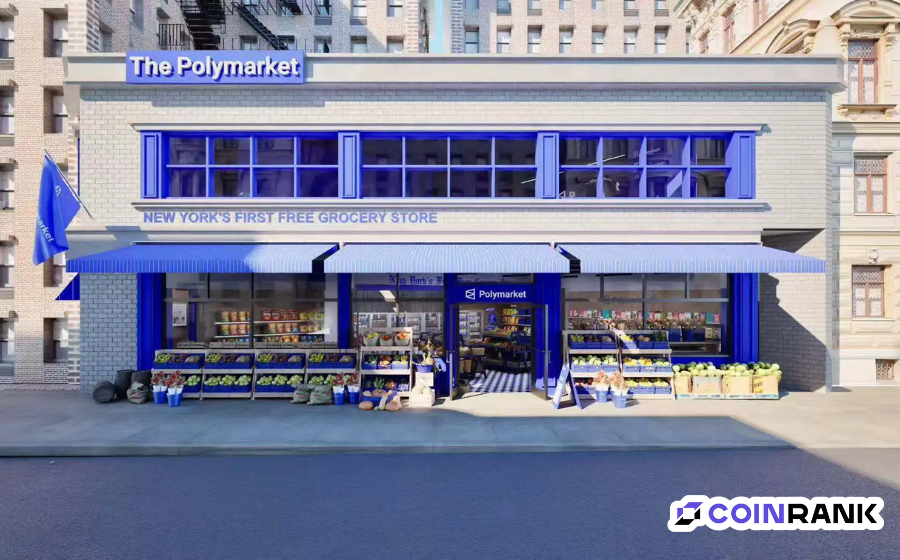
In the lead-up to the Super Bowl, often dubbed “America’s Spring Festival,” both platforms have launched aggressive offline promotion campaigns to capture public attention. Kalshi has been handing out $50 worth of free groceries to users at supermarkets in New York, while Polymarket has gone even further, unveiling its long-prepared “New York’s first free grocery store,” scheduled to open on February 12.
In their battle for visibility and user growth, these multi-billion-dollar prediction market giants have chosen one of the oldest—but still most effective—strategies: on-the-ground, offline promotion.
>>> More to read: What is Crypto Prediction Market? A Beginner’s Guide
KALSHI VS. POLYMARKET: THE OFFLINE PROMOTION BATTLE
As one of America’s leading global metropolises, New York has become a key battleground for prediction market giants Kalshi and Polymarket.
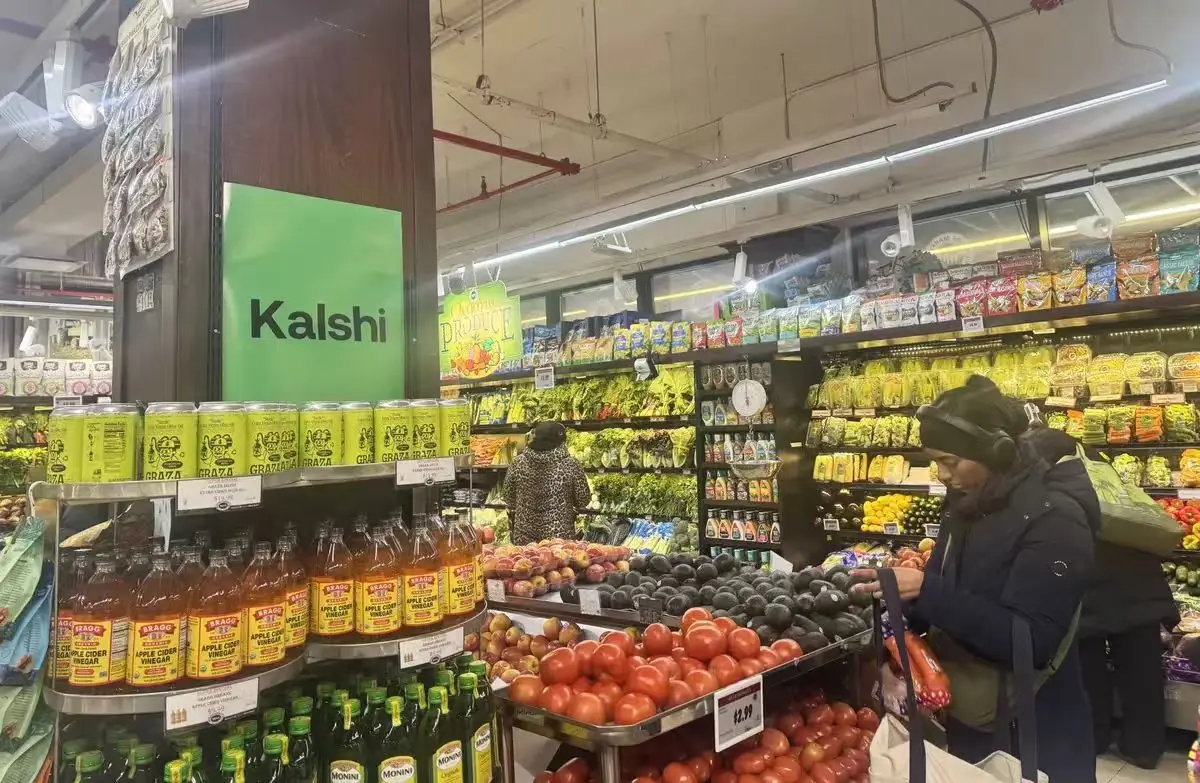
Against the backdrop of rising living costs in New York and across the United States, both platforms have recently rolled out major offline promotional campaigns.
On February 3, Kalshi distributed time-limited $50 grocery vouchers to selected users at Westside Market, located at 84 Third Avenue in New York, aiming to attract more participants to its real-world event prediction markets.
Judging from nearby street posters, in-store signage, and promotional materials, Kalshi’s offline campaign resembled an improvised “pop-up” activation. By partnering with a local supermarket and deploying temporary marketing materials, the platform used “free $50 groceries” as an incentive to draw crowds, encourage participation, and generate on-site attention.
Through this pop-up campaign, Kalshi appears to be targeting everyday, low-barrier betting topics—such as whether New York gas prices will exceed $3.30 this year—to lower the entry threshold for new users. The strategy aims to drive brand exposure, user acquisition, and platform engagement.
Thousands have already picked up their free Kalshi groceries!
We are being told we’ve already inspired other companies to keep up the initiative!
2 more hours to get yours
Westside Market | 84 3rd Ave. NYC pic.twitter.com/8R11OGODLu
— Kalshi (@Kalshi) February 3, 2026
>>> More to read: What is Kalshi Prediction Market?
Compared with Kalshi’s relatively rough and highly commercial approach, Polymarket’s preparations were noticeably more comprehensive.
Also on February 3, slightly ahead of Kalshi’s official announcement, Polymarket revealed that after months of preparation, it would open “New York’s first free grocery store” through a leased offline location on February 12 (Eastern Time). In addition, Polymarket donated $1 million to New York City’s food bank to help address regional food insecurity.
After months of planning, we’re excited to announce ‘The Polymarket’ is coming to New York City.
New York’s first free grocery store.
We signed the lease. And we donated $1 million to Food Bank For NYC — an organization that changes how our city responds to hunger. 🧵 pic.twitter.com/BGMCWUMz8n
— Polymarket (@Polymarket) February 3, 2026
Notably, Polymarket emphasized that its offline store would offer fully stocked supplies with no purchase required. At the end of its announcement, the platform also encouraged the public to donate to the city’s food bank, calling on people to take concrete action to address rising food prices and the broader cost-of-living-driven hunger problem.
>>> More to read: What is Polymarket? Web3 Prediction Market
WHY PREDICTION MARKETS ARE “GIVING AWAY EGGS”
The recent food donation campaigns by Kalshi and Polymarket were not coordinated with the New York City government and were initiated independently by the companies.
However, the language and objectives in their public statements closely resemble the policy positions repeatedly emphasized by New York’s newly elected mayor, Zohran Mamdani, during his campaign. Mamdani previously proposed opening publicly owned grocery stores across New York’s five boroughs to reduce food prices, arguing that nonprofit operations and the use of public property could significantly lower rent and operating costs. This initiative is still in a pilot phase, with no finalized implementation timeline.
At the same time, as one of the most politically influential states in the U.S., New York is actively drafting new legislation targeting the emerging prediction market sector. Among them, the proposed ORACLE Act aims to restrict or prohibit New York residents from betting on certain prediction market events and to impose stricter limits on event-based contracts. Another bill would require prediction market operators to obtain state-issued licenses before operating.
These developments reflect persistent concerns among some lawmakers, who continue to view prediction markets as resembling unregulated gambling or as being particularly vulnerable to insider manipulation.
Against this backdrop, although the mayor does not have direct regulatory authority over prediction markets, the actions taken by Kalshi and Polymarket may represent a strategic attempt to indirectly improve their regulatory standing—using social engagement and public welfare initiatives to cultivate a more favorable policy environment.
✏️ Seeing this unfold, one can’t help but reflect on the contrast
▶ “Fake” crypto promotions revolve around flashy conferences, luxury dinners, and hyping dubious concept tokens.
▶ “Real” crypto promotions, by comparison, involve giving away vegetables and eggs, opening offline stores to provide free food, supporting charitable causes, and encouraging public donations to help those in need.
In today’s market, genuine user growth is no longer driven by empty narratives, but by tangible value and real-world impact.