


KEYTAKEAWAYS
- The clearing of Ethereum’s staking exit queue signals easing structural sell pressure, but rising entries reflect sentiment repair rather than immediate price demand.
- Core fundamentals—including developer activity, stablecoin dominance, low gas fees, and exchange balances—are improving simultaneously.
- Ethereum’s recovery appears gradual and structural, driven by fundamentals instead of a short-term, sentiment-led price reversal.

CONTENT
Ethereum’s staking exit queue has cleared as entries surge, while developer activity, stablecoin usage, low gas fees, and exchange balances point to a gradual, fundamentals-driven recovery.
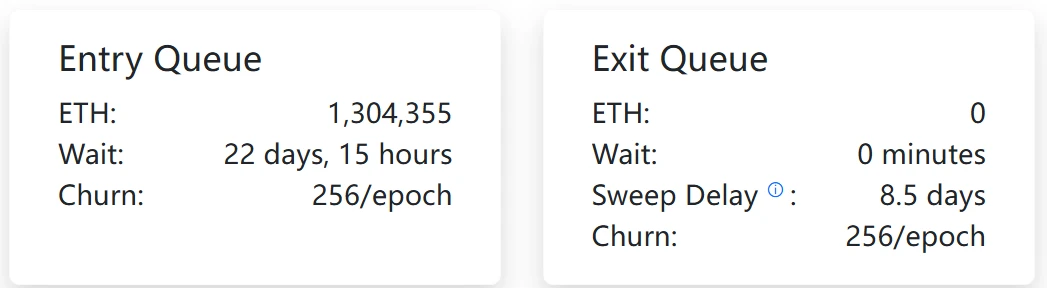
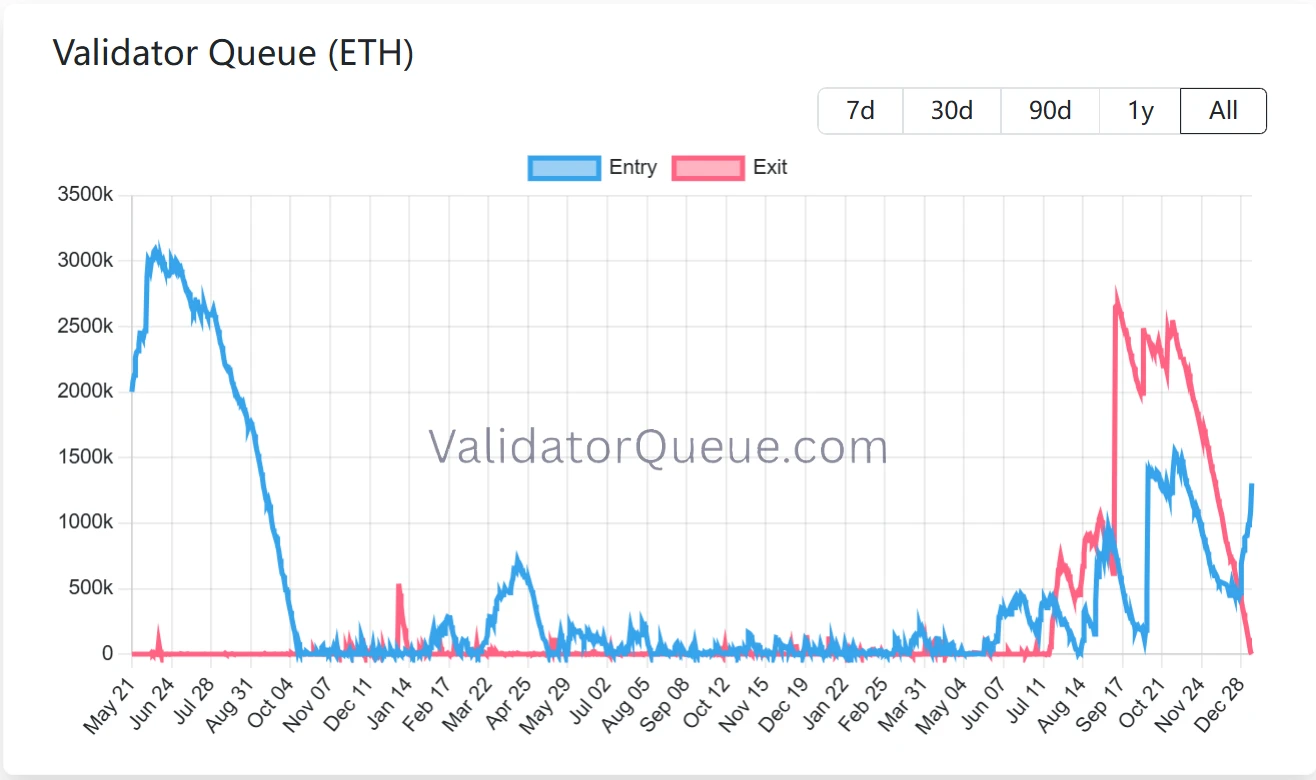
On January 7, Ethereum’s staking exit queue under the PoS mechanism was fully cleared. At least based on on-chain data, the persistent exit pressure that had lasted for several months has now been completely absorbed, with no signs of new large-scale withdrawal requests emerging.
At the same time, the staking entry queue has expanded sharply. The current queue has grown to approximately 1.3044 million ETH, with an estimated waiting time of 22 days and 15 hours—a near mirror image of the situation observed in mid-September last year.
At that time, ETH was trading near a local peak of around $4,700, and market sentiment was highly optimistic. However, staking behavior told a different story: roughly 2.66 million ETH entered the exit queue, pushing withdrawal wait times beyond 40 days. Over the following three and a half months, ETH’s price declined by approximately 34%, falling from $4,700 to around $3,100.
Now, after a significant price correction, the staking exit queue has finally been fully digested.
IS THE STAKING QUEUE A “SENTIMENT INDICATOR,” BUT NOT A PRICE SIGNAL?
Generally, changes in the validator queue are viewed as an important barometer of market sentiment. The logic is straightforward: under Ethereum’s PoS design, validators cannot freely enter or exit at will. To preserve consensus stability, the protocol uses rate limits to smooth staking and withdrawal activity over time.
As a result, when ETH prices are elevated, exit demand tends to accumulate. Some stakers choose to realize gains, but the potential selling pressure is not released instantly; instead, it is “stretched out” on-chain via the exit queue. Conversely, when exit demand gradually dries up—or is fully absorbed—it can signal that a phase of structural selling pressure is nearing its end.
From this perspective, the current clearing of the exit queue alongside a simultaneous rise in the entry queue is indeed a notable shift. However, I would argue that while this change appears positive on the surface, its impact on price is not symmetric with the “high exits, low entries” phase observed in September. The reason is that unstaked ETH is highly likely to flow directly to exchanges, exerting immediate pressure on price. By contrast, ETH entering the staking queue does not necessarily imply fresh spot demand. A meaningful portion of these tokens may have been accumulated earlier and are only now being reallocated into staking.
Therefore, a rising staking entry queue primarily reflects a shift in preferences toward long-term yield, network security, and stable staking returns—rather than a sharp increase in near-term price demand. In that sense, the current improvement in queue structure is better interpreted as expectation repair than as an equally strong catalyst for short-term price appreciation.
That said, the recent surge in staking entries still warrants attention. The most significant driver appears to be BitMine, Ethereum’s largest DAT treasury holder. According to data from CryptoQuant, BitMine has staked approximately 771,000 ETH over the past two weeks—about 18.6% of its total holdings of roughly 4.14 million ETH.
This suggests that the current shift in staking trends is being driven by the asset-allocation decision of a single large institution, rather than by a broad-based recovery in market risk appetite. As such, it should not be simplistically interpreted as a return of universal bullish sentiment. Still, in a young market like crypto—where liquidity is unevenly distributed—the actions of large institutions can more easily provide short-term emotional support and help repair expectations.
Whether this trend can persist and spread to a wider set of participants remains to be seen. Nevertheless, from an on-chain fundamentals perspective, several of Ethereum’s core metrics are now showing signs of marginal improvement in tandem.
FROM STAKING SHIFTS TO BROAD-BASED FUNDAMENTAL IMPROVEMENT
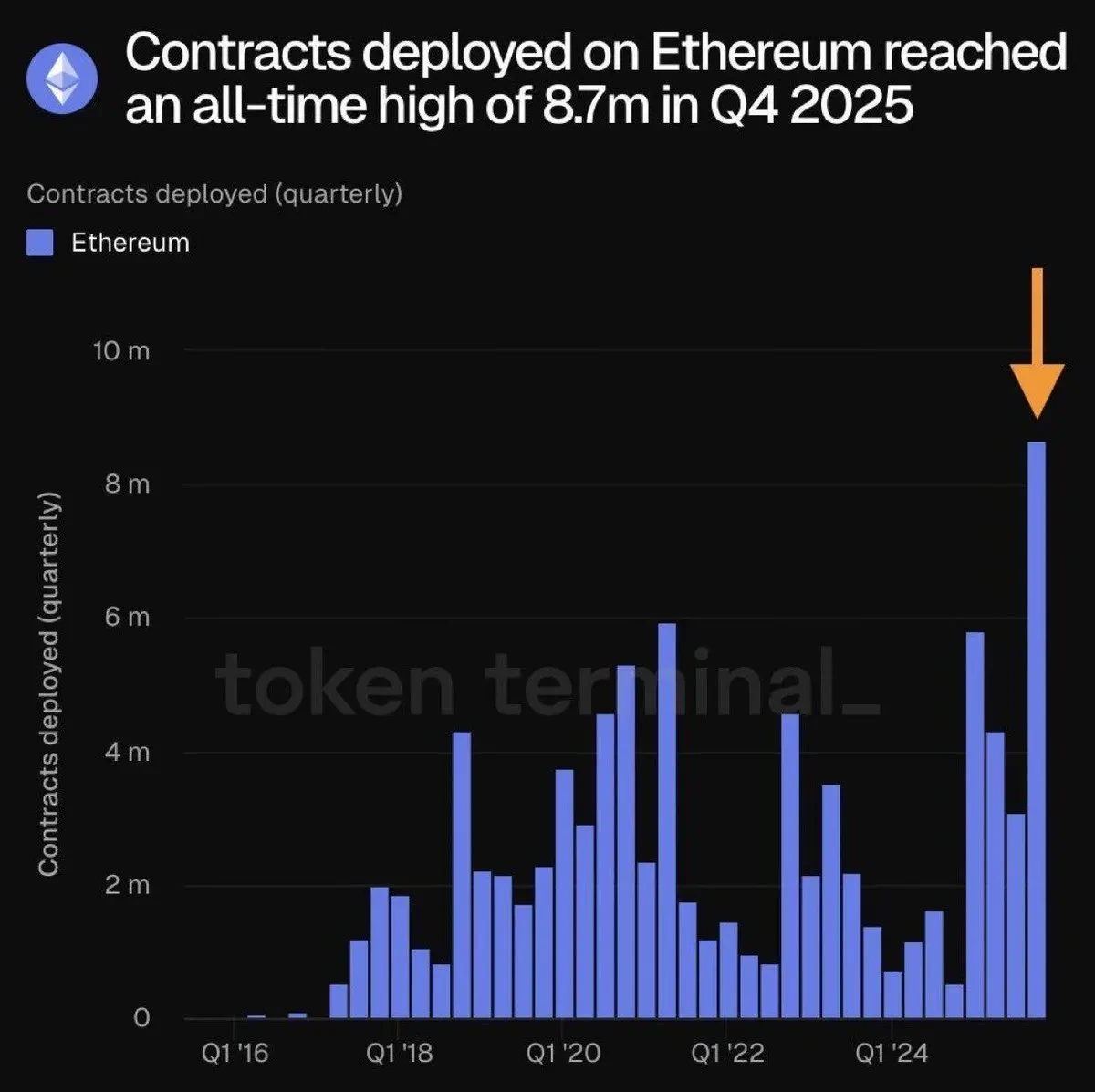
First, on the developer front, Ethereum’s development activity is reaching new all-time highs. Data shows that in Q4 2025, approximately 8.7 million smart contracts were deployed on Ethereum, marking a record for any single quarter. This trend points more toward sustained product and infrastructure building rather than short-term speculative behavior. A higher volume of contract deployments implies that more DApps, RWAs, stablecoins, and core infrastructure are being built and launched, reinforcing Ethereum’s role as the central execution and settlement layer of the crypto ecosystem.
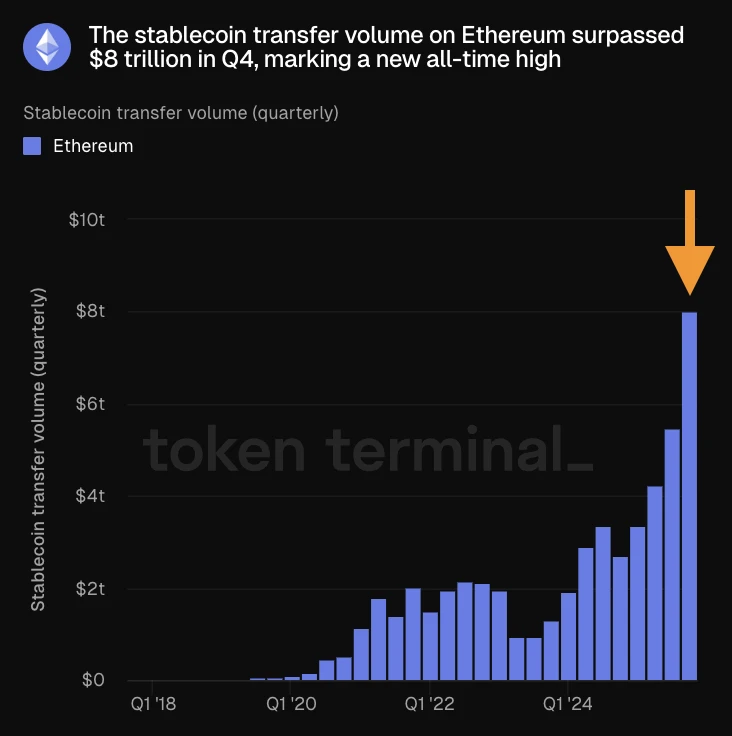
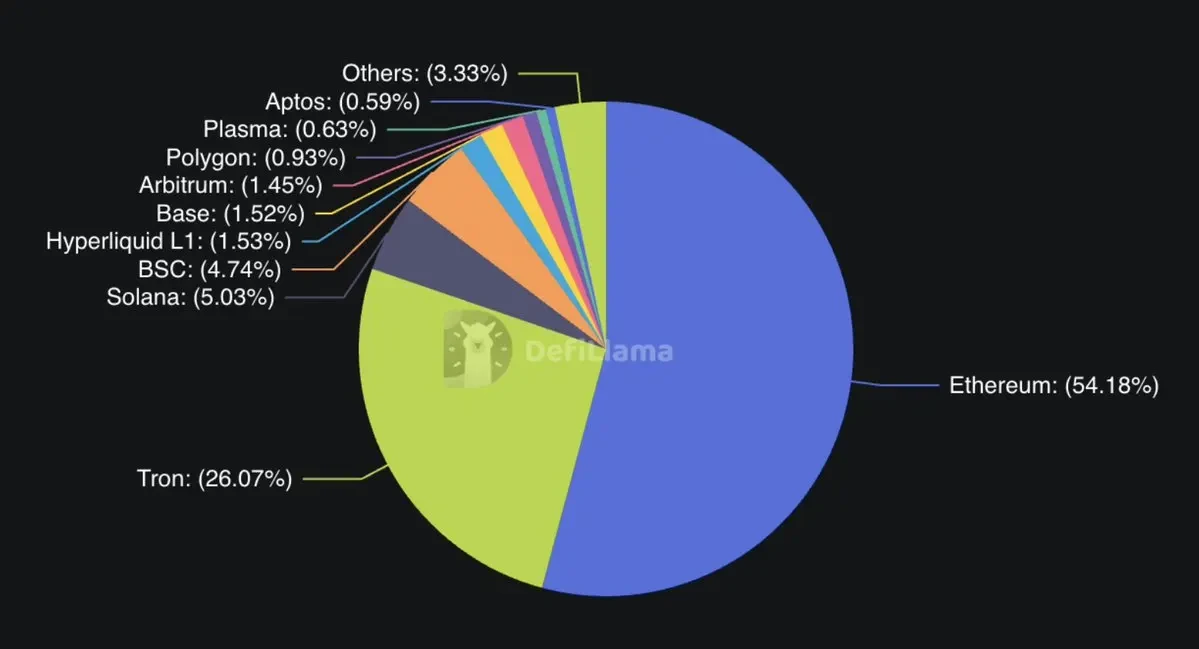
In the stablecoin sector, Ethereum also set a new milestone in the fourth quarter, with on-chain stablecoin transfer volume surpassing $8 trillion, another record high. From an issuance perspective, Ethereum’s dominance within the stablecoin ecosystem remains clear. Data indicates that 54.18% of all stablecoins are issued on Ethereum—well ahead of TRON (26.07%), Solana (5.03%), and BSC (4.74%), among other major blockchain networks.
Taken together, these trends suggest that Ethereum’s recent staking dynamics are not occurring in isolation, but alongside a broader, multi-dimensional improvement in on-chain fundamentals.
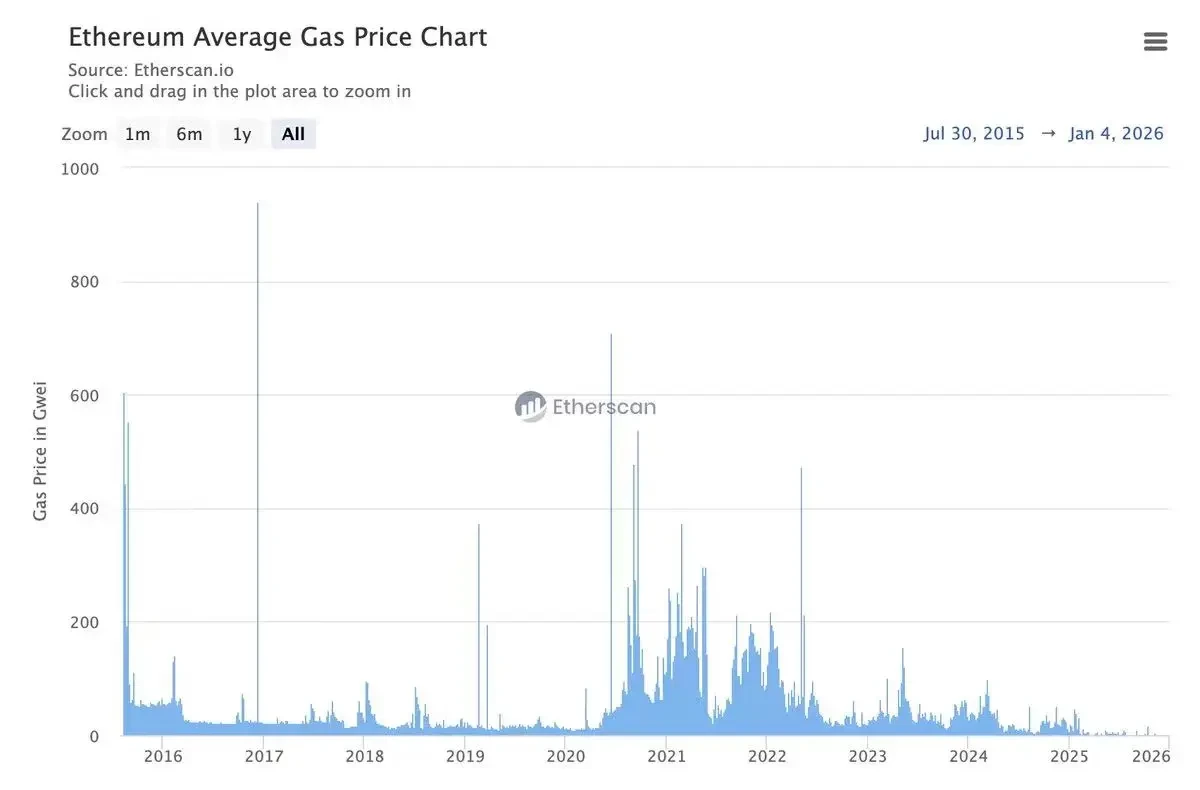
Meanwhile, Ethereum’s gas fees have fallen to the lowest levels since mainnet launch and continue to set new record lows. During certain periods, gas fees have dropped below 0.03 gwei. Given that Ethereum is still advancing block capacity expansion this year, this trend has room to persist over the medium term. Lower transaction costs directly reduce the barrier to on-chain activity and provide a practical foundation for sustained growth at the application layer.
Looking at exchange balances, Ethereum’s potential selling pressure also appears subdued. In mid-December, ETH held on exchanges fell to approximately 12.7 million ETH, the lowest level since 2016. Notably, since August 2025, this metric has declined by more than 25%. Although exchange balances have ticked up slightly in recent weeks, the increase amounts to only around 200,000 ETH, leaving overall levels near historical lows—suggesting that traders’ willingness to sell remains limited.
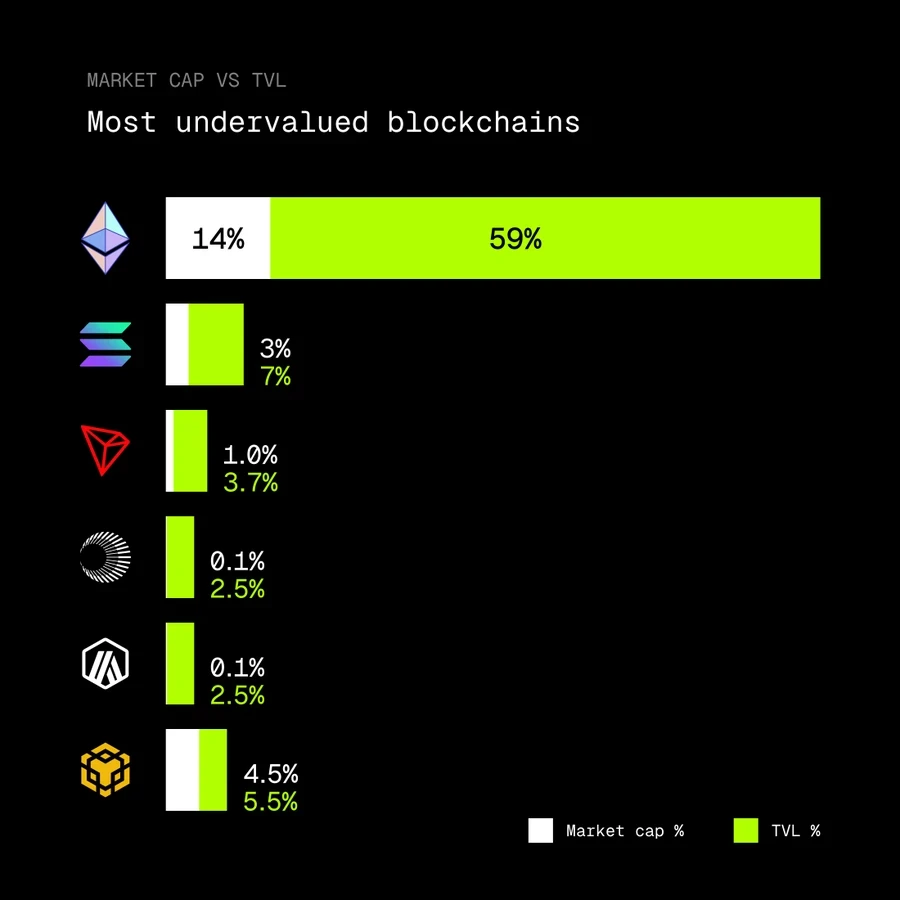
In addition, crypto KOL rip.eth recently noted on X that Ethereum may be one of the most undervalued blockchain networks when comparing total value locked (TVL) to market capitalization. Data shows that Ethereum accounts for roughly 59% of the crypto market’s TVL, while ETH’s share of total market capitalization is only about 14%. By comparison, Solana shows a market cap / TVL ratio of 3% / 7%, TRON stands at 1% / 3.7%, and BNB Chain at 4.5% / 5.5%. To some extent, this highlights a clear mismatch between ETH’s valuation and the scale of economic activity it supports.
CONCLUSION
Taken together, changes in the staking queue may not be the single variable that determines price direction. However, when these shifts occur alongside improvements in developer activity, stablecoin usage, transaction costs, and exchange balances, they no longer represent isolated signals. Instead, they form a more comprehensive picture of improving fundamentals.
For Ethereum, this may not signal a rapid, sentiment-driven rebound. Rather, after undergoing a deep adjustment, the network appears to be gradually restoring structural stability across its core economic and on-chain metrics.