









KEYTAKEAWAYS
- Bitcoin is a decentralized, scarce digital asset designed for long-term value storage and market-driven price discovery.
- Stablecoins prioritize price stability through peg mechanisms, making them ideal for payments, trading, and risk management.
- Bitcoin and stablecoins are complementary tools—one absorbs volatility for returns, the other minimizes volatility for liquidity.

CONTENT
Bitcoin and stablecoins explained: how decentralized digital money differs from price-pegged crypto, their use cases, risks, and why both play complementary roles in the crypto ecosystem.
WHAT IS BITCOIN?
Bitcoin is the world’s first decentralized digital currency, introduced in 2009 by an anonymous creator known as Satoshi Nakamoto. Its defining feature is that it operates without any central authority. Instead of relying on banks or governments, Bitcoin uses blockchain technology to record and verify transactions in a transparent, secure, and tamper-resistant way.
Within the Bitcoin network, transactions are grouped into blocks and linked together chronologically to form a blockchain. This structure allows anyone to verify transaction records while making it extremely difficult to alter historical data. As a result, Bitcoin achieves trust not through centralized control, but through open verification and decentralized consensus.
From a monetary design perspective, Bitcoin has a fixed maximum supply of 21 million coins. This hard cap gives Bitcoin a built-in sense of scarcity. Because its supply cannot be adjusted by policy decisions and its price is determined entirely by market demand, Bitcoin tends to experience higher price volatility compared to traditional currencies.
Over time, the role of Bitcoin has continued to evolve. Beyond being viewed as a speculative investment, Bitcoin is increasingly regarded as a long-term store of value and, by some, a hedge against monetary uncertainty. At the same time, it has seen growing use in cross-border transfers and limited merchant payment scenarios, highlighting its practical applications beyond price speculation.
-
Decentralization
Bitcoin operates without any central authority. Transactions are validated by a distributed network, giving users true financial sovereignty over their assets.
-
Scarcity:
Bitcoin has a hard-coded maximum supply of 21 million coins. This fixed limit prevents arbitrary issuance and gives Bitcoin a built-in scarcity that many view as supportive of long-term value.
-
Security:
Through cryptographic principles and a globally distributed miner network, Bitcoin maintains a highly secure transaction system where records are extremely difficult to alter.
💡 The value of Bitcoin does not come from technology alone, but from the combination of scarcity, shared market consensus, and a decentralized architecture.
>>> More to read: What is Bitcoin: A Comprehensive Overview
WHAT ARE STABLECOINS?
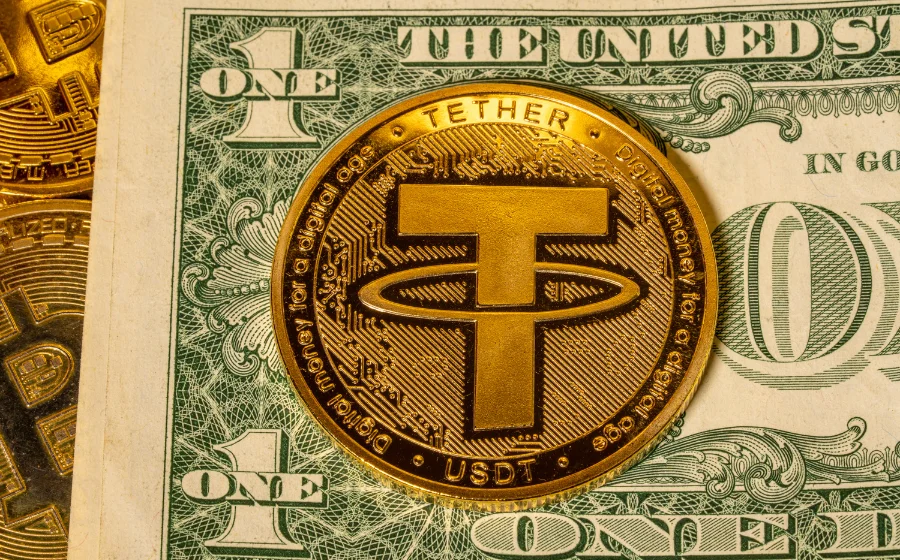
Stablecoins are a type of cryptocurrency designed to maintain a stable value by being pegged to a fiat currency, most commonly the U.S. dollar (USD) at a 1:1 ratio. The original purpose of Stablecoins was to address the sharp price fluctuations seen in assets like Bitcoin, allowing cryptocurrencies to function more reliably as tools for payments and transfers.
Unlike highly volatile digital assets, Stablecoins are not designed to capture price appreciation. Instead, their primary goal is value stability. This makes Stablecoins especially useful in everyday crypto activity, where users need a predictable unit of account to move funds, settle transactions, or temporarily step away from market volatility without leaving the blockchain ecosystem.
The price stability of Stablecoins is maintained through what is known as a peg mechanism. Depending on the design, this mechanism may rely on real-world fiat reserves, crypto asset collateral, or algorithmic supply adjustments to keep the market price aligned with its reference value. These structures allow Stablecoins to remain closely anchored to their target price under normal market conditions.
Because of their low volatility and high usability, Stablecoins have become some of the most liquid assets in the crypto market. They are widely used as trading pairs, settlement assets, and short-term risk management tools during periods of heightened market uncertainty. Within the broader crypto ecosystem, Stablecoins function less like speculative assets and more like digital cash—bridging traditional finance and on-chain markets.
-
Value Stability:
Stablecoins are designed to maintain a relatively stable price, making them well-suited for trading, transfers, and short-term value storage.
-
Ease of Integration:
Because Stablecoins are typically pegged to fiat reserves, they can be more easily integrated into existing financial systems, bridging traditional finance and on-chain markets.
-
Low Volatility:
Unlike highly volatile cryptocurrencies, Stablecoins offer a practical hedge against extreme price fluctuations and are commonly used during periods of market uncertainty.
>>> More to read: What is Stablecoin ? Stable Virtual Assets
BITCOIN & STABLECOINS: 5 KEY DIFFERENCES EXPLAINED
1️⃣ Price Volatility
The most visible difference between Bitcoin and Stablecoins lies in price behavior.
Bitcoin is priced entirely by free market supply and demand, resulting in significant price fluctuations. Stablecoins, by contrast, are pegged to fiat currencies such as the U.S. dollar and typically experience minimal price movement under normal conditions.
2️⃣ Issuance and Mechanism
Bitcoin and Stablecoins are created through fundamentally different processes.
Bitcoin is issued through mining, following a predefined and decentralized protocol. Stablecoins are usually issued by institutions or smart contracts according to specific peg mechanisms.
3️⃣ Use Case and Functional Role
In practice, Bitcoin and Stablecoins serve different purposes.
Stablecoins are commonly used for payments, settlements, capital transfers, and hedging. Bitcoin, on the other hand, is more often used for investment, value storage, and long-term positioning against inflation.
4️⃣ Sources of Risk
The risk profiles of Bitcoin and Stablecoins differ in nature.
Bitcoin mainly carries market volatility risk, along with technical and security considerations. Stablecoins face risks related to issuer reserves and potential regulatory changes.
5️⃣ Investment Characteristics
From an investment perspective, Bitcoin and Stablecoins sit at opposite ends of the risk spectrum.
Bitcoin is generally considered a high-risk, high-reward asset, while Stablecoins are low-volatility instruments designed for stability and liquidity rather than capital appreciation.
✏️ Overall, Bitcoin and Stablecoins are not competing assets but complementary tools within the crypto ecosystem. Bitcoin absorbs volatility in exchange for potential long-term returns, while Stablecoins minimize volatility to keep capital mobile and predictable.
>>> More to read: What’s the Difference Between Blockchain and Bitcoin?
WHY DON’T STABLECOINS EXPERIENCE SHARP PRICE SWINGS?
For many people, the first thing they notice when encountering Stablecoins is how their prices “barely move.” This is not a coincidence. From the very beginning, Stablecoins were deliberately designed with one core objective: price stability.
The key reason lies in the pricing control logic behind Stablecoins, commonly known as the peg mechanism. This mechanism automatically adjusts supply to keep the market price of Stablecoins anchored close to 1 U.S. dollar over time.
In practice, the logic behind Stablecoins is relatively straightforward and can be summarized in two scenarios:
✅ When the price rises above $1
The system issues additional Stablecoins, increasing market supply and naturally pushing the price back down through supply–demand dynamics.
✅ When the price falls below $1
The system removes or burns a portion of Stablecoins, reducing supply and helping the price move back toward its target level.
Through this supply adjustment process, Stablecoins are able to maintain relatively stable prices even during periods of extreme market volatility. This is also one of the key differences between Stablecoins and highly volatile crypto assets such as Bitcoin.
However, it’s important to understand that “stability” does not mean “zero risk.” If an issuer lacks sufficient reserves, fails to provide transparent disclosures, or relies on a flawed algorithmic design, the peg mechanism can break. In such cases, Stablecoins may lose their price anchor and even collapse entirely.
The most well-known example is the UST collapse in 2022. Once market confidence in that Stablecoin eroded, the system was unable to remove enough supply to restore the peg. As a result, the price adjustment mechanism failed, leading to a complete breakdown and the token ultimately falling to zero.
>>> More to read:
USE CASES & PRACTICAL APPLICATIONS
📌 Bitcoin Use Cases
-
Investment Purpose:
Bitcoin is often described as “digital gold.” Investors use Bitcoin as a hedge against inflation and as a long-term store of value.
-
Transaction Use:
Bitcoin enables fast and secure cross-border transactions without relying on intermediaries such as banks or payment processors.
📌 Stablecoin Use Cases
-
Trading and Risk Management:
During periods of high market volatility, investors use Stablecoins to exit volatile crypto positions without converting back to fiat currency.
-
Remittance Services:
Stablecoins offer a cost-effective and efficient solution for cross-border money transfers compared to traditional remittance systems.
-
Lending and Borrowing:
In decentralized finance (DeFi), Stablecoins are widely used to facilitate lending and borrowing using a relatively stable unit of account.
>>> More to read: Cryptocurrency vs Virtual Currency | How to Distinguish Them?
BITCOIN VS STABLECOINS FAQ
Q1. Can Bitcoin and Stablecoins—especially Stablecoins—collapse?
Yes, but the probability is relatively low. As long as a Stablecoin issuer maintains sufficient reserves and provides transparent disclosures, the price can usually remain close to 1 USD. However, the 2022 UST collapse showed that when algorithmic designs or reserve mechanisms fail, a stablecoin can lose its peg. This is why major Stablecoins such as USDT and USDC are generally considered lower risk.
Q2. Are Bitcoin and Stablecoins—specifically Stablecoins—safer than Bitcoin?
If “safety” refers to price volatility, Stablecoins are indeed much more stable than Bitcoin, as their prices rarely fluctuate.
However, in terms of overall risk, Stablecoins are still exposed to regulatory changes, policy risk, and issuer credibility. Bitcoin, while highly volatile, is decentralized and not controlled by any single entity—its safety largely depends on how users store and manage it.
Q3. Which is better for investment: Bitcoin and Stablecoins?
It depends on your objective:
- For short-term risk management or temporarily parking capital, Stablecoins are more suitable.
- For long-term investment and potential returns, Bitcoin is often preferred.
In practice, many investors hold Bitcoin and Stablecoins together—using Stablecoins as an intermediate asset and gradually buying Bitcoin during market downturns to spread risk.
Q4. Can Bitcoin and Stablecoins be held at the same time?
Yes—and it’s very common. Stablecoins can be treated as a “cash reserve,” providing flexibility during market volatility, while Bitcoin functions as a long-term asset position aimed at growth. Holding Bitcoin and Stablecoins together allows investors to balance stability and return potential.