








KEYTAKEAWAYS
- Proof of Burn (POB) secures blockchain networks by requiring participants to destroy tokens as an irreversible economic commitment.
- By replacing hardware and electricity with token burning, Proof of Burn (POB) aims to reduce energy consumption while preserving incentive alignment.
- Despite its potential benefits, Proof of Burn (POB) remains debated, with open questions around scalability, transparency, and real-world adoption.

CONTENT
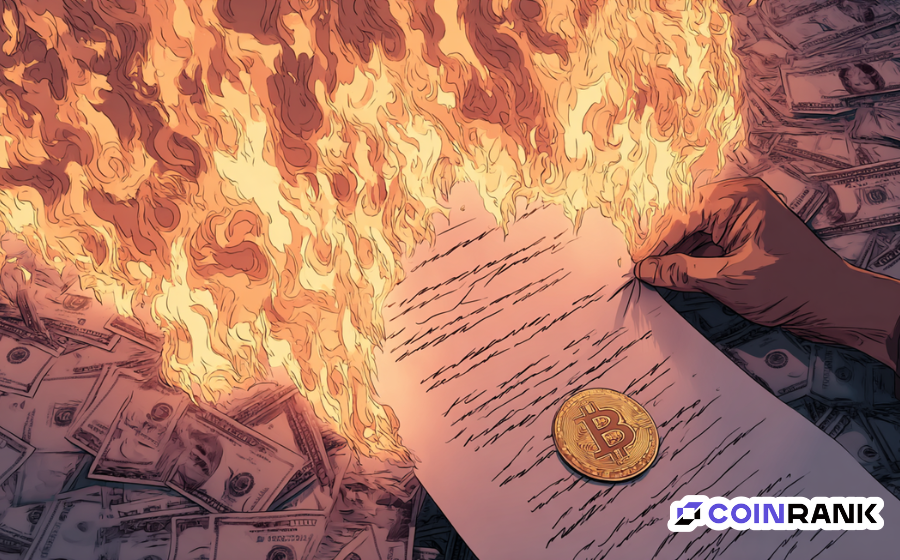
Proof of Burn (POB) is a blockchain consensus mechanism that secures networks by permanently burning tokens, replacing energy-intensive mining with economic commitment.
WHAT IS PROOF OF BURN (POB)?
Proof of Burn (POB) is a blockchain consensus concept that exists in several variations, but the version most widely recognized in the crypto industry was proposed by Iain Stewart. It was introduced as a more sustainable alternative to traditional consensus models, particularly as a way to rethink how long-term network commitment can be established without relying on heavy resource consumption.
At a conceptual level, Proof of Burn (POB) can be viewed as a lower-energy counterpart to Proof of Work. Instead of requiring miners to compete through raw computational power or specialized hardware such as ASICs, PoB replaces physical resource expenditure with intentional economic sacrifice. In this model, cryptocurrencies are deliberately destroyed—or “burned”—as a form of investment into the blockchain network.
Under a Proof of Burn (POB) system, miners do not invest in hardware or electricity. Instead, they allocate capital to what can be described as a virtual mining platform, where burned tokens represent virtual mining power. This design removes the need for continuous energy consumption while preserving a cost-based mechanism for participation.
In practical terms, burning tokens allows participants to demonstrate their long-term commitment to the network and earn the right to validate transactions and produce blocks. The act of burning coins functions as a proxy for mining power: the more tokens a participant destroys, the greater their virtual hash power within the system.
As a result, in a Proof of Burn (POB) consensus model, users who burn larger amounts of cryptocurrency gain a higher probability of being selected as the next block validator. This approach shifts competition away from physical resources and toward economic commitment, forming the core logic behind the PoB consensus mechanism.
>>> More to read: What is Proof of Stake (PoS)?
HOW DOES PROOF OF BURN WORK?
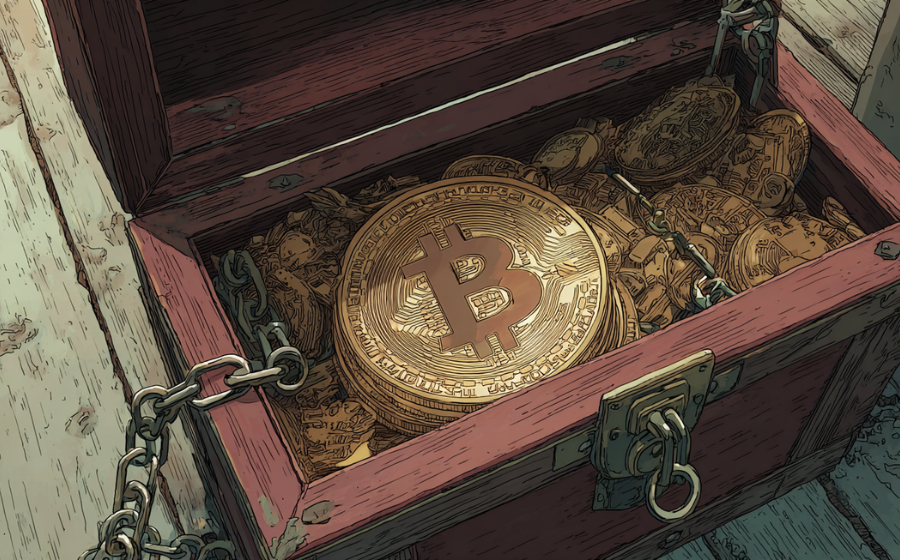
At a basic level, Proof of Burn (POB) works by permanently removing tokens from circulation. This is done by sending coins to a publicly verifiable address where they can no longer be accessed, owned, or spent. In most cases, these burn addresses are randomly generated addresses with no known private key, ensuring that the burned coins are effectively lost forever.
From a market perspective, burning tokens reduces circulating supply and introduces scarcity, which may contribute to potential value appreciation over time. However, in the context of Proof of Burn (POB), scarcity is not the primary objective. More importantly, token burning functions as an alternative form of investment used to help secure the blockchain network.
One of the reasons Proof of Work blockchains are considered secure is that miners must commit substantial real-world resources before they can earn rewards. This upfront cost—whether in electricity, hardware, or operational expenses—creates a strong incentive for miners to act honestly, since malicious behavior would risk wasting their initial investment.
Proof of Burn (POB) follows a similar incentive logic, but replaces physical resource consumption with economic sacrifice. Instead of investing electricity, labor, or computational power, participants secure the network by burning coins. The burned tokens themselves represent the cost of participation and the miner’s commitment to the system.
Like Proof of Work blockchains, Proof of Burn (POB) systems reward miners with block rewards. Over time, these rewards are expected to compensate for the initial cost of burned coins, aligning long-term incentives between network security and participant profitability.
As mentioned earlier, there are multiple ways to implement Proof of Burn (POB). Some projects require participants to burn Bitcoin in order to gain mining or validation rights, while others achieve consensus by burning their own native cryptocurrencies. Despite these variations, the underlying principle remains the same: long-term network security is enforced through irreversible economic commitment rather than ongoing physical resource expenditure.
>>> More to read: What is Proof of Work (PoW)?
PROS AND CONS OF PROOF OF BURN
The advantages and disadvantages outlined below are based on commonly cited arguments from supporters of Proof of Burn (POB). They should not be treated as established facts. Many of these claims remain debated within the crypto community and require further testing and real-world validation before they can be confirmed or dismissed.
✅ Advantages
One of the most frequently mentioned benefits of Proof of Burn (POB) is sustainability. Because the mechanism does not rely on continuous computational work, it is often described as more energy-efficient compared to traditional mining-based systems.
Another advantage is that Proof of Burn (POB) eliminates the need for specialized mining hardware. Instead of physical machines, token burning acts as a form of virtual mining power, lowering the barrier to participation.
Burning cryptocurrency also reduces circulating supply, introducing scarcity into the market. While this is not the primary goal of Proof of Burn (POB), it is often cited as a secondary economic effect.
Supporters further argue that Proof of Burn (POB) encourages long-term commitment from miners. Because burned tokens cannot be recovered, participants are incentivized to behave honestly and remain engaged with the network over time.
Finally, some proponents believe that Proof of Burn (POB) can lead to a more decentralized distribution of mining or validation power, as participation is not dominated by access to industrial-scale hardware or cheap electricity.
❗Disadvantages
Critics argue that Proof of Burn (POB) is not truly environmentally friendly. In cases where Bitcoin is burned, those coins were originally produced through Proof of Work mining, which already consumed significant energy and resources.
Another concern is scalability. There is currently no conclusive evidence that Proof of Burn (POB) can operate efficiently or securely at the scale of large blockchain networks. More testing and real-world deployment are needed to evaluate its long-term viability.
Verification delays are also cited as a drawback. Compared to Proof of Work systems, validation and confirmation of miner activity in Proof of Burn (POB) networks may take longer, reducing responsiveness.
Lastly, the token-burning process itself is not always fully transparent or easily verifiable by average users. In some implementations, it may be difficult for non-technical participants to independently confirm that coins have truly been burned.